Your fitting report + what the pros are actually stringing at
Welcome to Perfect Racket's monthly newsletter! In this first edition, we'll be discussing:
What's happening in the tennis gear world
One practical fix from the court
The racquet of the month
First, something you might have lost track of:
Your personal fitting report - Your racquets, strings, exact tension, and the reasoning behind all of it:
Your fitting report is still here. It doesn't expire. It arrived by email right after your fitting. Lost it? Retake your fitting at perfectracket.com and you'll get a fresh one.
This Month In Tennis
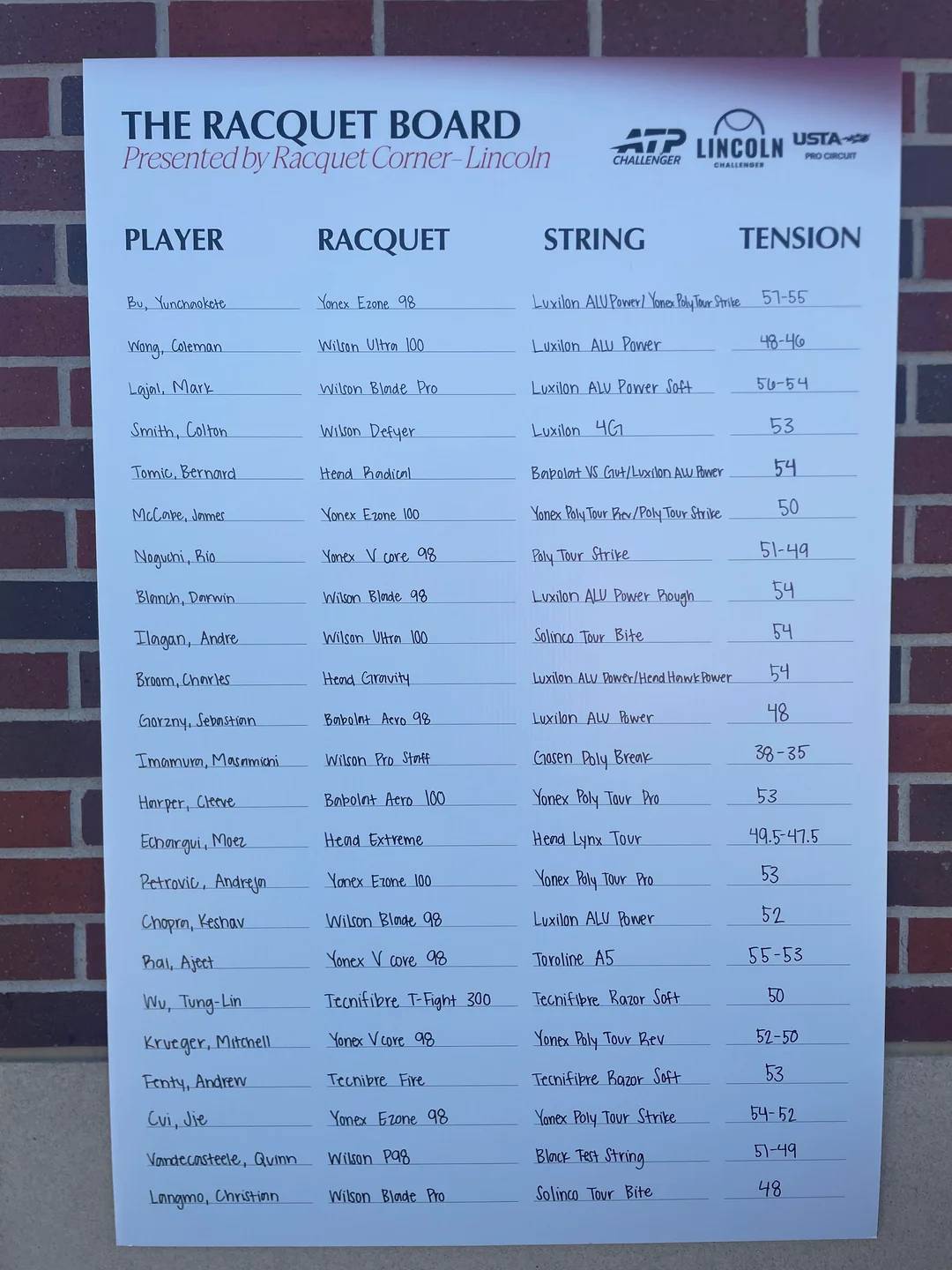
We found the pro's racquet board at the Lincoln Challenger
At the Lincoln Challenger in July, the stringing desk posted every player's setup. Racquet, string, tension, all of it on one board.
The racquet board at the Lincoln Challenger
Not a single Pure Drive or Clash on the board - the two racquets marketed hardest to everyday players. The pros were overwhelmingly on control frames: Blades, VCOREs, EZONE 98s, Pro Staffs. And the tensions? Almost every setup was in the low 50s, averaging about 51 lbs.
WHAT IT MEANS FOR YOU: the players who hit the biggest string the loosest, and play frames built for precision, not power.
From The Court
Your elbow feels tension you can't
Every extra pound of string tension stiffens the string bed, and a stiffer bed sends more shock into your forearm on every off-center hit. For most of us that's about a third of our shots. Which is why "my arm's a little sore after tennis" is usually a stringing problem before it's a technique problem.
Try this in your next session, before you change anything.
Play normally, and pay attention to how your forearm feels the next morning. Not during play, when adrenaline hides everything. The next morning. If the answer is "a little achy," ask your stringer for 2 to 3 lbs less at your next restring, and give it two sessions before you judge it.
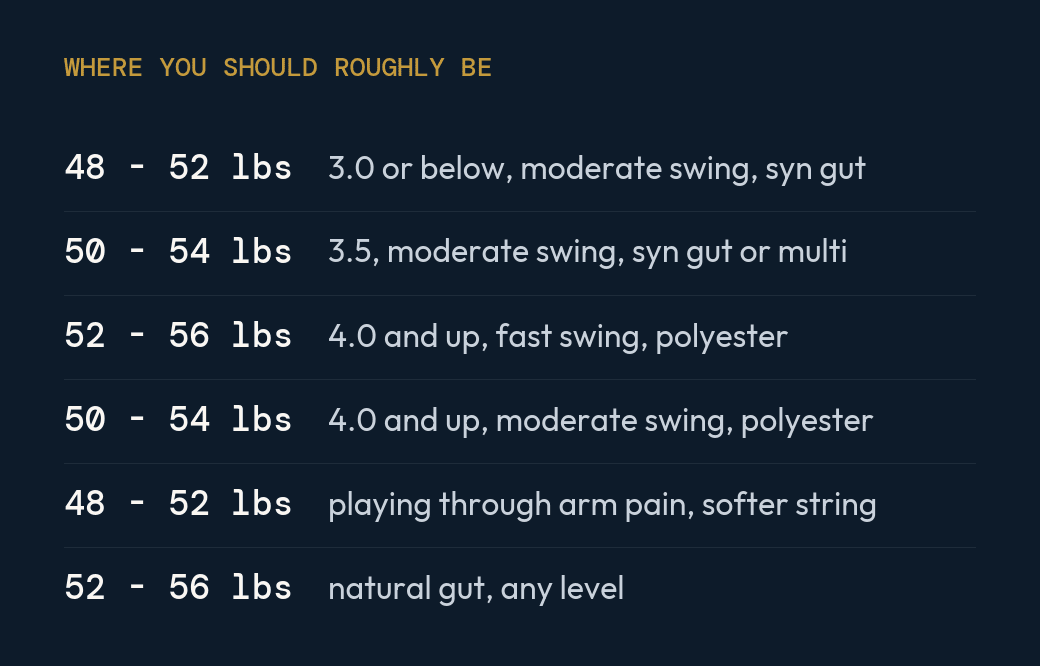
Tension Range
This is the range most players in each situation land in from our research:
Two things here surprise people. Stronger players string higher, not lower, because they generate their own pace and need the control. And if your arm hurts, the answer is usually a softer string at a lower tension, not a stiffer setup to keep the ball in.
Your own numbers are in your report, and they account for more than this chart can.
Racquet Of The Month
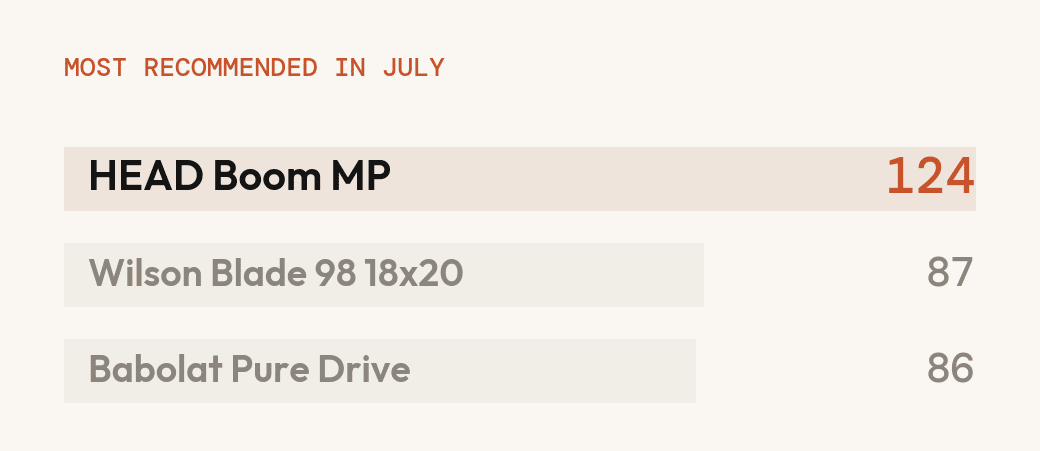
The Blade came from zero recommendations in June to second place in July, finishing one fitting ahead of the Pure Drive.
Why the Boom keeps winning: it fits how most people actually play. 3.0 to 4.0 players who want comfort and easy power in one frame instead of a specialist's tool. It's not the racket the magazines rave about. It's the one that keeps fitting real games.
That's it for issue one! I'd love your feedback on The Racket Report Monthly. What did you like? What did you dislike? What would you like to learn or see in next month's issue?
Take the free fitting and get matched to the frames that actually fit your game, your level, and your arm. You'll also get The Racket Report Monthly, one email a month with what real players are playing, plus your personal fitting report.